
Your diagram isn’t a decision. Our model is.
stuart
Why it exists
Challenge the number before you commit.
Most architecture diagrams are rectangles with opinions. stuart connects architecture, cost, and delivery from what you actually have, so you can compare paths before you fund one. Unknowns stay visible. Missing prices stay missing.
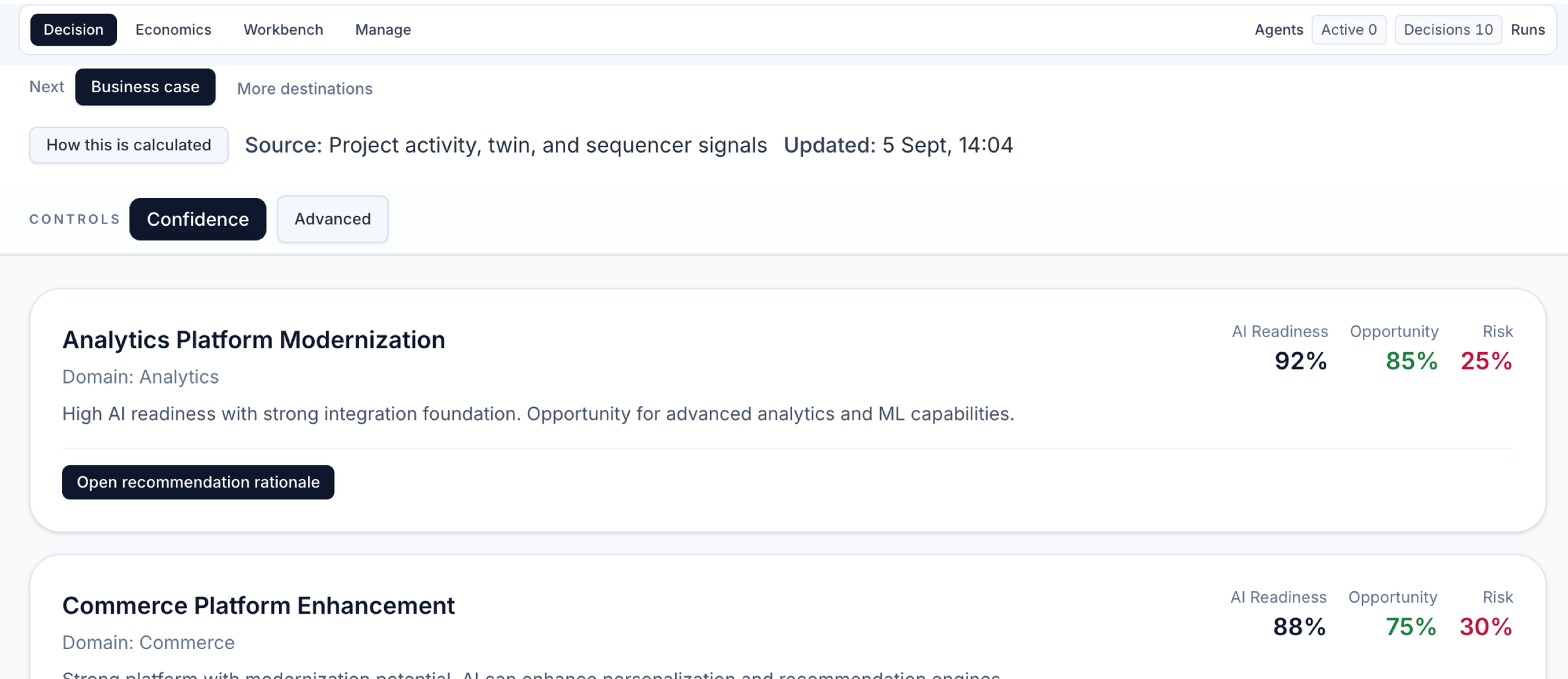
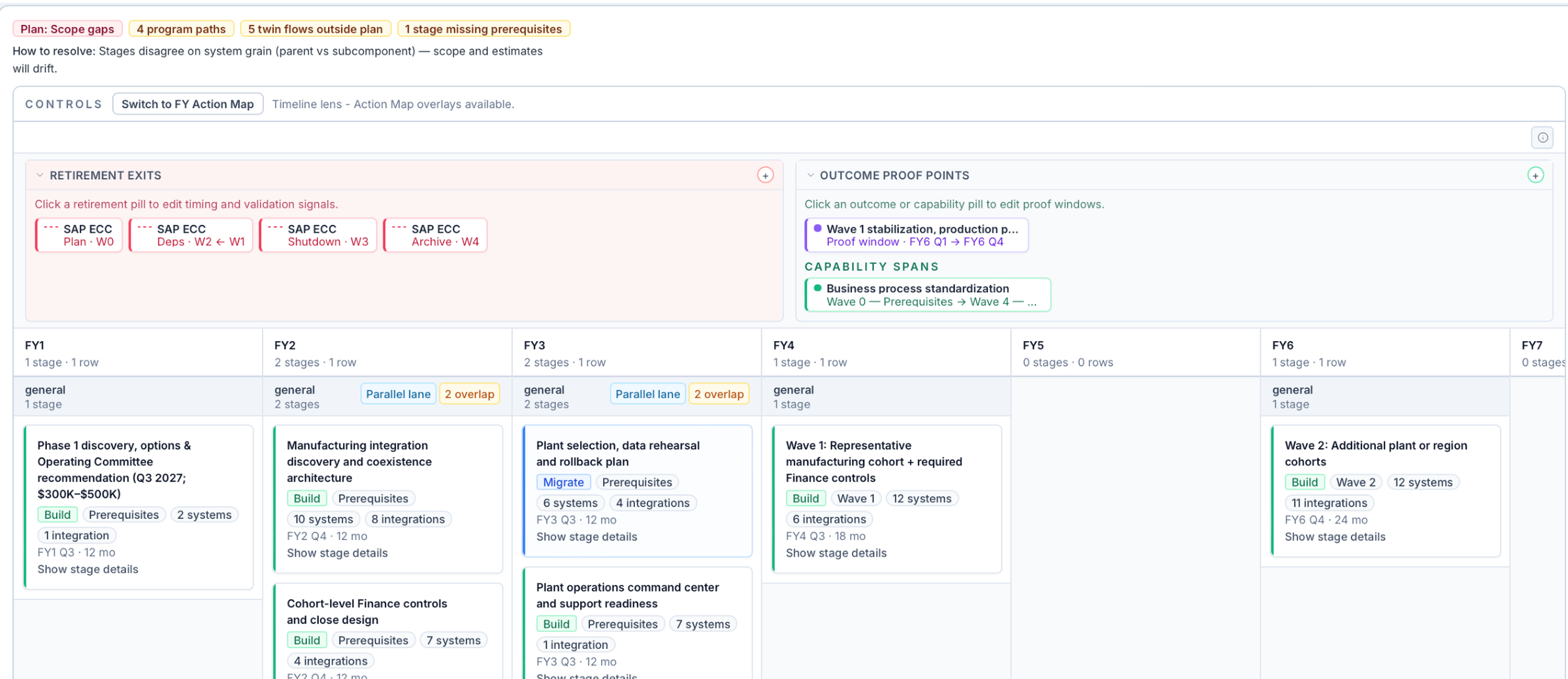
A missing dependency showed up. The “approved” path did not survive contact with what you actually run. Better before the spend than after.
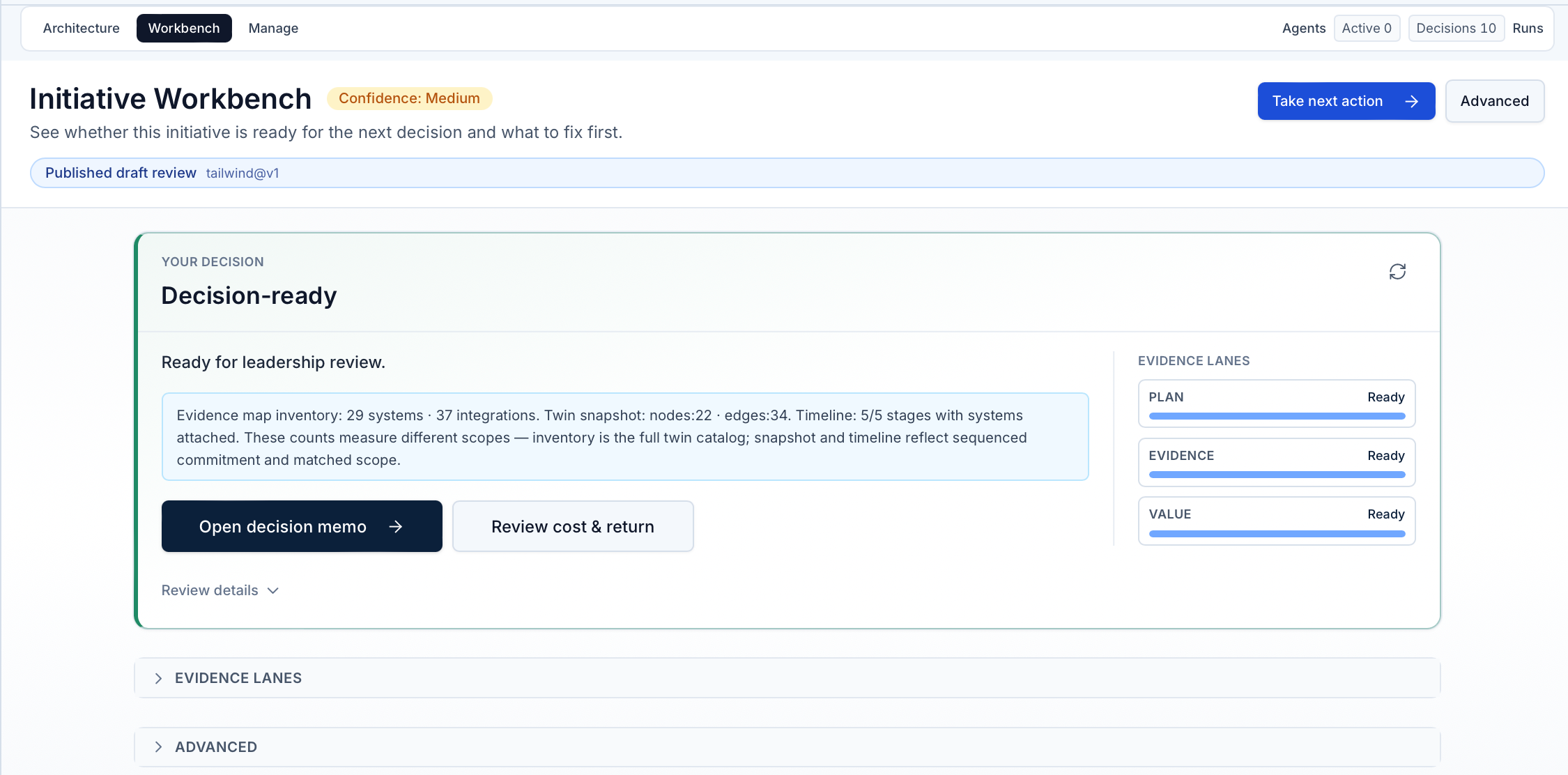
Architecture, cost, and delivery share one read of the landscape. Gaps stay marked. Nothing looks ready until the evidence can carry it.
Connected model
Each function looking at the same landscape.
Not three decks of the same boxes arguing past each other. One model, so the next move is not made from one corner alone. Finding something is not the same as promising you can ship it.
How it works
Architecture. Economics. Delivery.
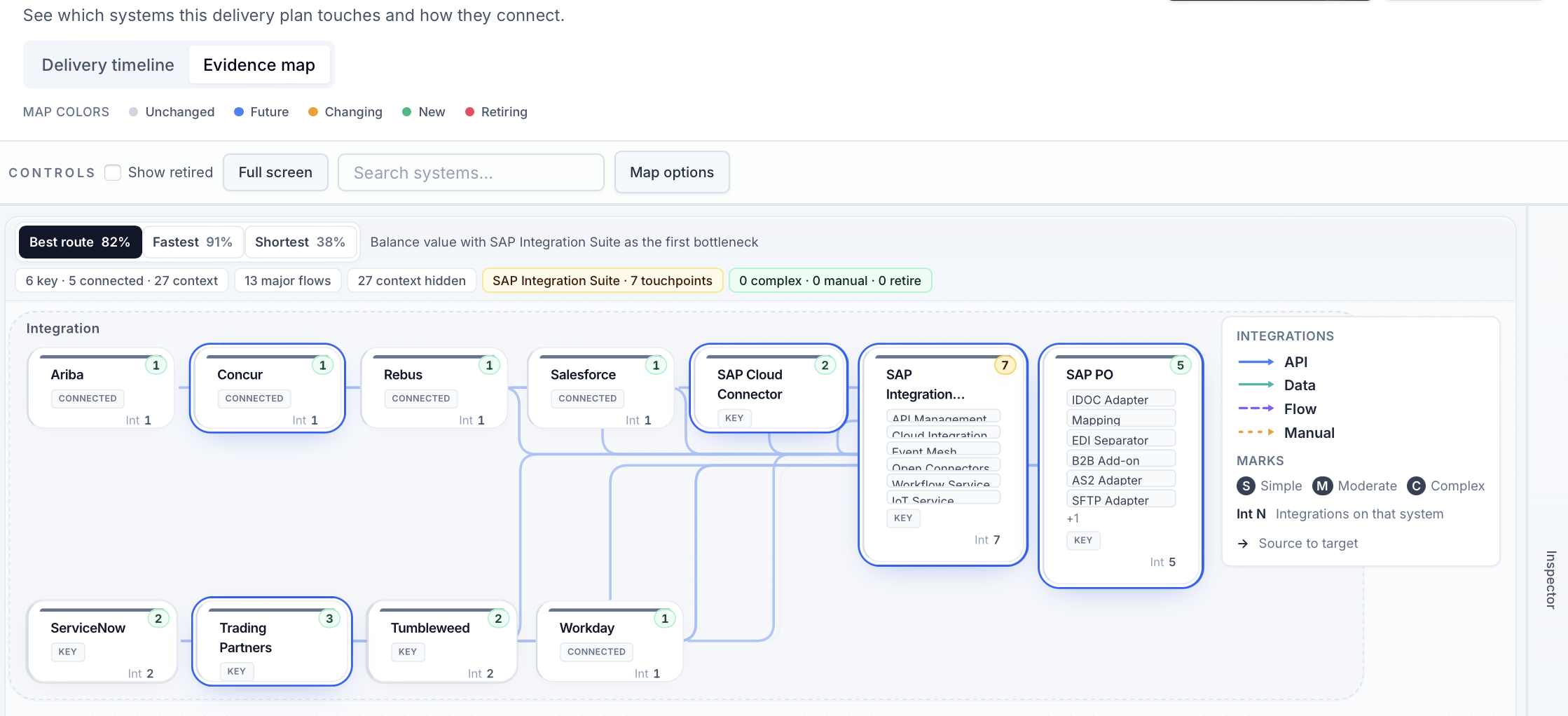
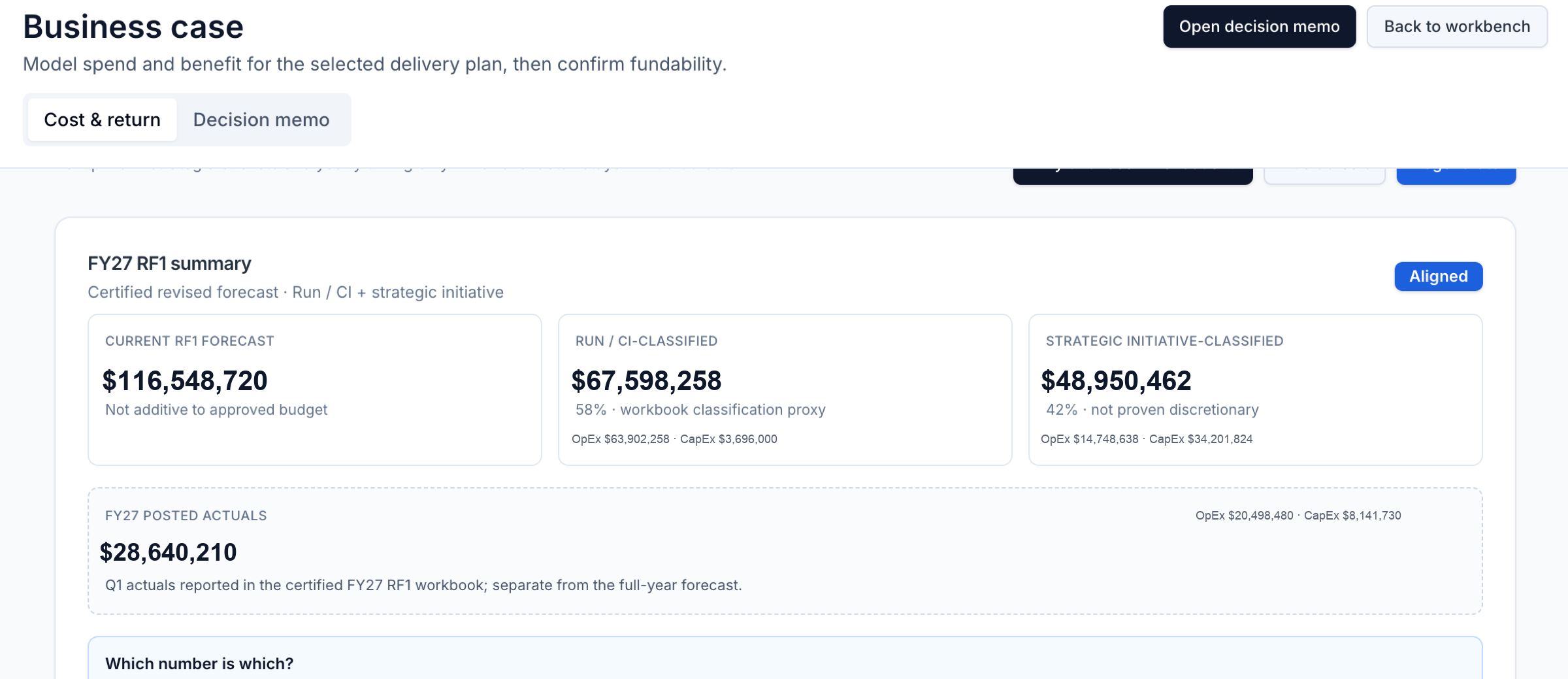
One model. Gaps stay visible. If the number only works when you squint, it does not leave the room.
Use cases
Ask it something that matters.
- Application retirement
What can retire first, what it depends on, and what that does to cost and risk.
- Modernization sequencing
Compare migration and replacement paths before capacity and timing lock in.
- Technology cost optimization
See run versus transform spend on the same landscape, and where capital actually sits.
- Investment-case challenge
Expose the assumptions and capacity peaks behind the path everyone already likes.